

Ethical Teaching : ค้นหาหนังสือธรรมะ หน้า 2 / 4
หน้าหนังสือทั้งหมด
144
Keeping the Five Precepts Intact
How do you keep the Five Precepts intact?
When I was a student, I started training myself to observe
the Five Precepts. This is how I did it.
Before I was ordained, I wore a Buddha image around
my nec
This text describes a personal journey of observing the Five Precepts, a set of ethical guidelines in Buddhism. The author shares their experience of using a Buddha image for daily chanting and resolu
54
Raising Children: The Four Requisites for Success
Part Two: Raising Children
using the four requisites. We will need to ask ourselves if we
have the ability to maintain quality (always delivering our
best); ability to manage our time (seeing all the
In raising children, it's crucial to embody qualities of quality, time management, and financial prudence, as children absorb both good and bad traits from their parents. By consistently modeling thes
128
Journey to Joy
Journey to Joy
128
anger, dissatisfaction in life, depression, physical
dysfunctions, burning out symptoms and different
stages of inner and outer conflicts, mainly showing
up in their partnerships an
In 'Journey to Joy', the focus is on addressing the negative emotions and conflicts in life, particularly those manifesting in family and partnership dynamics. The text emphasizes the importance of te
127
The Impact of Dhamma on Children's Mindfulness
Suzanne Jeffrey
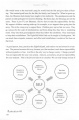
fish would come to the road and Luang Pu would feed the fish and give them a blessing. That created good boon for the fish, the family, and Luang Por. When he grew up, then, the Dhamm
This text discusses how early Dhamma teachings and the support of family can influence a child's mindfulness and ethical behavior. It reflects on the challenges of modern society where distractions li
137
Lessons from a Dharma Master
Thankings with a Dharma Master
ourselves. This is also an important room for economy, as well, because we have to learn to cut back on our spending for clothing and accessories. The last room is the
In this insightful text, a Dharma Master emphasizes the vital role of teachers and parents in shaping children's morality and behaviors. The importance of creating supportive environments in homes and
38
Youth Development Activities by Dhammakyha Foundation
YOUTH DEVELOPMENT
ACTIVITIES
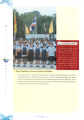
Dhammakyha Foundation has always emphasized youth development. To do our best to fill the ethics vacuum experienced by children growing up in an increasingly secular a
Dhammakyha Foundation prioritizes youth development by addressing the ethics vacuum in society. The foundation offers 3-7 day residential courses on ethical living and meditation for students and teac
165
Understanding Right Livelihood and Wrong Trade
hardly be able to find anyone to praise them;
4. They will spend forthcoming lifetimes in hell.
Having heard the Buddha’s teaching, Khema attained
stream-entry, never committing adultery again
This ex
In Buddhist teachings, Right Livelihood refers to earning a living that upholds ethical values and avoids harmful practices. It specifically highlights five types of Wrong Trade which are prohibited:
98
Understanding Child Behavior and Parental Responsibility
Children often encounter problems later in life because
the parents did not fulfill these responsibilities.
Why Do Some Children Behave Badly?
Our ancestors provided us with a very interesting answer.
Children face challenges later in life when parents neglect their responsibilities. This text explores how inadequate parenting skills contribute to children's understanding of right and wrong and the
136
Teaching Children to Live by the Five Precepts
Chapter 32
Teaching Children to Live
by the Five Precepts
It is not an overstatement to say that teaching children to
abide by the Five Precepts is the most important responsibility
of their parents;
Teaching children to abide by the Five Precepts is crucial for shaping their futures and that of society. It is the responsibility of parents to impart these teachings, as many adults struggle to unde
139
The Importance of the Five Precepts in Society
4. We shall not lie, utter profanity, speak nonsense, or
use divisive words.
5. We shall not consume intoxicants such as addictive
drugs and alcohol.
These Precepts are needed to keep peace on earth.
The Five Precepts serve as fundamental guidelines for maintaining peace on earth. Originating before Buddha, they measure human behavior: full adherence results in complete humanity, while deviating r
54
Raising Smart and Virtuous Children
utilize the four requisites, how they work, and how they
conduct their daily activities.
Parents can instill wholesomeness, intelligence, and
compassion towards others by teaching their children resp
This text discusses the importance of teaching children the four requisites—respect, discipline, and endurance. It emphasizes the balance between worldly wisdom and Dhamma wisdom, highlighting how bot
69
Teaching Children Frugality for Financial Security
Chapter 11
Teaching Children Frugality to Ensure the Family's Future
Children's future financial security can be measured by their frugality and parents can cultivate good economic sense in their c
Chapter 11 emphasizes the importance of teaching children frugality as a means to secure their financial future. It advocates for parents to model good economic sense and begin instilling these habits
172
The Importance of Dhamma in Family Life
By studying Dhamma every day, our ancestors were always reminded of the Lord Buddha’s teaching about never failing to make merit. Because everyone will die someday, the only things that we can bring w
Daily practice of Dhamma has been essential for past generations, teaching the importance of accumulating merit over sin. By fostering moral values in families, ancestors contributed to the developmen
7
Pharajbhananaavisudh: A Journey in Dhamma and Meditation
In year 1969, Pharajbhananaavisudh [Venerable Dhammajayo Bhikkhu] ordained at Paknam
thus entered Buddhist priesthood. Since then he has been committed to teaching with compassion all Buddhists
freque
In 1969, Pharajbhananaavisudh, or Venerable Dhammajayo Bhikkhu, dedicated himself to teaching Buddhism and meditation, especially to children of his temple congregation. His dream of establishing a de
39
Interpretations of Dhammakāya in Early Pāli Texts
Gombrich, while differently translating the term in this passage as a bahubbiha compound 'dhamma-bodied,' similarly interprets it as an indication that the Buddha's true import is due to 'his teaching
This text delves into various scholars' interpretations of the term 'dhammakāya' within the context of early Pāli suttas. Gombrich views it as 'dhamma-bodied,' emphasizing that the essence of the Budd
44
Qualities of a Stream-Attainer in Buddhism
mentioned in the canon.40
The title ‘son of the Blessed one’ suggests that, through the
Buddha, the person was (re)born to the same plane (bhūmi) to which
the Buddha belongs, i.e., passing beyond the
This text delves into the characteristics of a Stream-attainer, identified as a noble disciple who is reborn to a transcendental plane through the Buddha's teachings. Key qualities include association
49
The Tathāgata and Brahmā: A Semantic Analysis
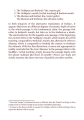
1. The Tathāgata and Brahmā,48 the creator god
2. The Tathāgata's mouth (verbal teaching) & Brahmā mouth.
3. The dhamma and Brahmā, the creator god; or
The dhamma and Brahman, the ultimate reality.
I
This passage delves into the nuanced relationships between the Tathāgata and Brahmā, highlighting the semantic layers present in verbal teachings. It contrasts the Tathāgata's mouth with Brahmā's, ind
67
Understanding Dhammakāya in Relation to Paccekabuddhas and Enlightenment
early texts that 'dhammakāya' must be singular. 100 In any case, the verse conveys the meaning that a Paccekabuddha has dhamma(s) as his body (or bodies), where 'dhammas' refers to the qualities perta
This study analyzes the term 'dhammakāya' and its relation to enlightenment. Dhammakāya is presented as a singular concept applying to both the Buddha and Paccekabuddhas, emphasizing that 'dhamma' ref
32
Meetings with a Dhamma Teacher
Meetings with a Dhamma Teacher
for the people he loves… which for him, I found out, is everyone. And that is why he is so stern. He wants people to reach for, and experience, success in their lives,
This text shares a personal journey of learning meditation from a dedicated Dhamma teacher. The teacher, who deeply cares for everyone, emphasizes the importance of reaching for success in meditation
129
The Formation of Habits and Teaching Morality
Suzanne Jeffrey
which will lead to destructive thoughts and eventually into darkness. So, as we can see,
different habits lead to different lives. All of our habits come from our early training.
“Ho
This text discusses how habits develop from early training and repeated actions, and emphasizes that both good and bad habits influence our lives. It highlights the need for teachers to first correct